When life feels like open conflict, a form of spiritual warfare, it’s easy to wonder if God sees what’s happening. Revelation 12 answers that fear with a loud, clear message: the battle is real, but it isn’t random, and it isn’t out of control.
This chapter sits in the middle of John’s visions and pulls back the curtain. It shows the spiritual war behind earthly pressure, and it shows God actively guarding His people through Jesus Christ.
If you want to read the full chapter first, keep Revelation 12 in the NKJV open as a reference while you study.
Revelation 12 in the story of the end times (why this chapter isn’t “just symbolism”)
Revelation 12 is a “sign” chapter, but it’s not a fairy tale. It’s a picture-language summary of real history and real future events. In a dispensational, futurist reading, it also functions like a parenthesis, explaining what’s happening behind the scenes during the Great Tribulation judgments, all under the sovereignty of God.
That matters because many people search for “Revelation 12 explained” hoping for a timeline. John gives one for the Great Tribulation, but he also gives something deeper: the identity of the enemy and the certainty of God’s plan.
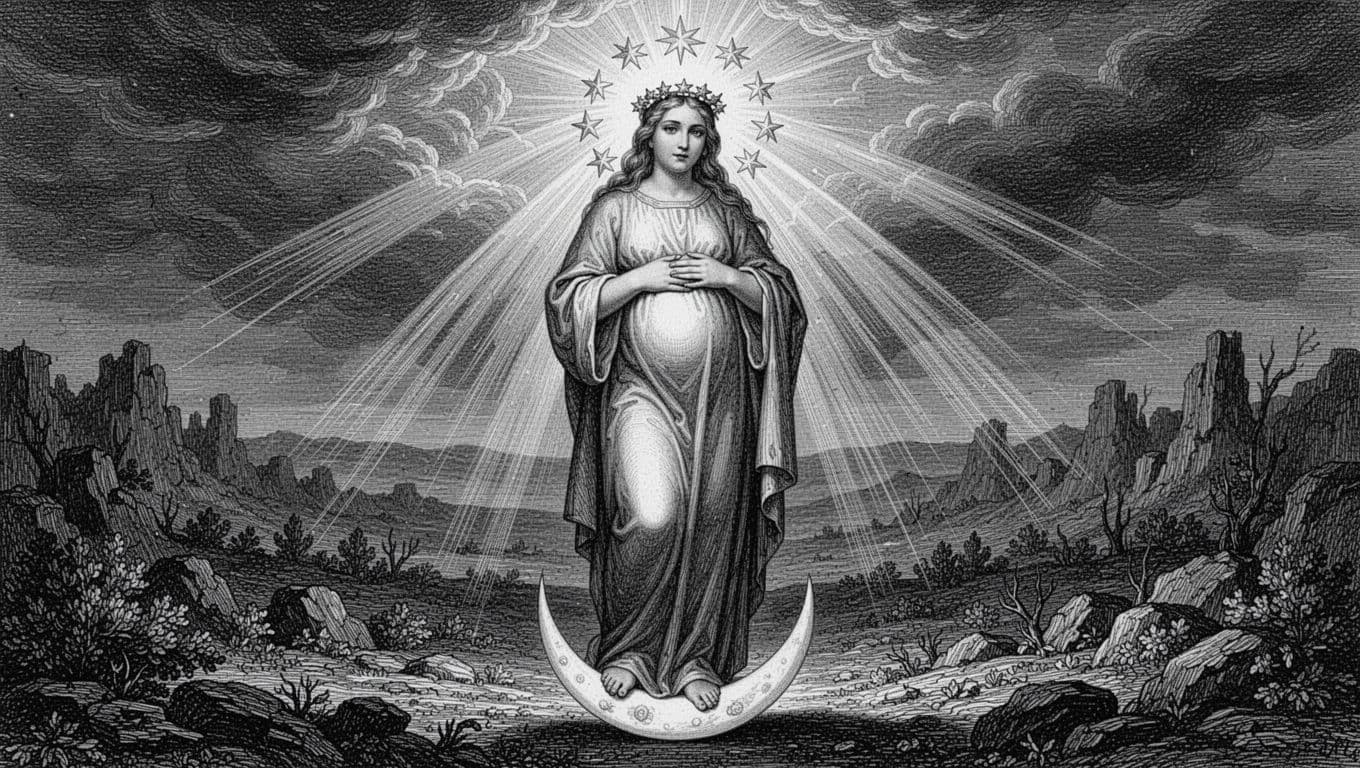
The chapter introduces key players: the woman clothed with the sun, the great red dragon, the male Child, Michael, and a faithful remnant. The symbols are consistent with the rest of Scripture, especially Joseph’s dream imagery in Genesis (sun, moon, stars), which points toward Israel as a nation symbolized by the woman crowned with twelve stars. Many solid dispensational notes land there too, including Dr. Constable’s notes on Revelation 12.
So, what’s the big idea? Revelation 12 provides a prophetic history of the conflict between the great red dragon and God’s people. God keeps His promises to Israel, Satan fights those promises, and the conflict intensifies in the end times. At the same time, the chapter gives comfort to any believer walking through a war season, because it shows God preparing places of refuge before the pressure hits.
Revelation 12 doesn’t ask you to ignore trouble. It asks you to see trouble in its true size, under God’s rule.
The woman, the male Child, and the dragon (Revelation 12:1-6, NKJV)
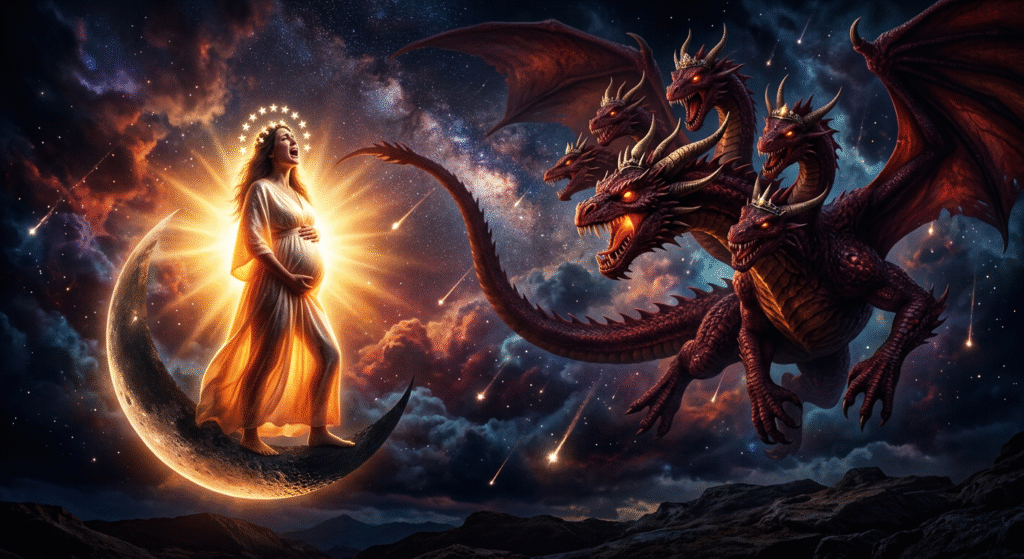
Revelation 12 opens with a radiant woman in travail. In dispensational theology, this woman represents Israel, pictured in covenant glory, yet suffering in expectation. Out of Israel comes the male Child, the Messiah, Jesus Christ, who will rule all nations with a rod of iron.
Then the great red dragon appears, with seven heads and ten horns. The chapter identifies him plainly as Satan. He stands ready to devour the Child, which fits the long pattern of satanic attacks against the Messianic line, from Pharaoh’s slaughter to Herod’s rage. Still, the Child is “caught up to God and His throne,” a compressed way of pointing to Christ’s victory, resurrection, and ascension.
This is where people often miss the flow. Revelation 12 is not retelling the Gospels for trivia. It’s explaining why the Tribulation turns intensely against Israel. Satan failed to stop Christ. So he turns his fury toward the nation connected to God’s kingdom promises.
Verse 6 introduces a key time marker: one thousand two hundred and sixty days, which matches three-and-a-half years. In dispensational chronology, this connects to the second half of Daniel’s 70th week, often called the Great Tribulation. Israel’s remnant flees to her place prepared by God in the wilderness.
Scholars debate details, but they agree the chapter uses rich symbolism. For a more academic look at how interpreters map these symbols, see a study on Revelation 12’s symbols.
This also speaks to “war seasons” now. God may not remove the conflict immediately, but He often prepares provision and direction ahead of time. A Christian Seer will tell you the same thing in practice: the Holy Spirit’s guidance is frequently preventative, not just reactive.
War in heaven, and why it changes earth (Revelation 12:7-12)
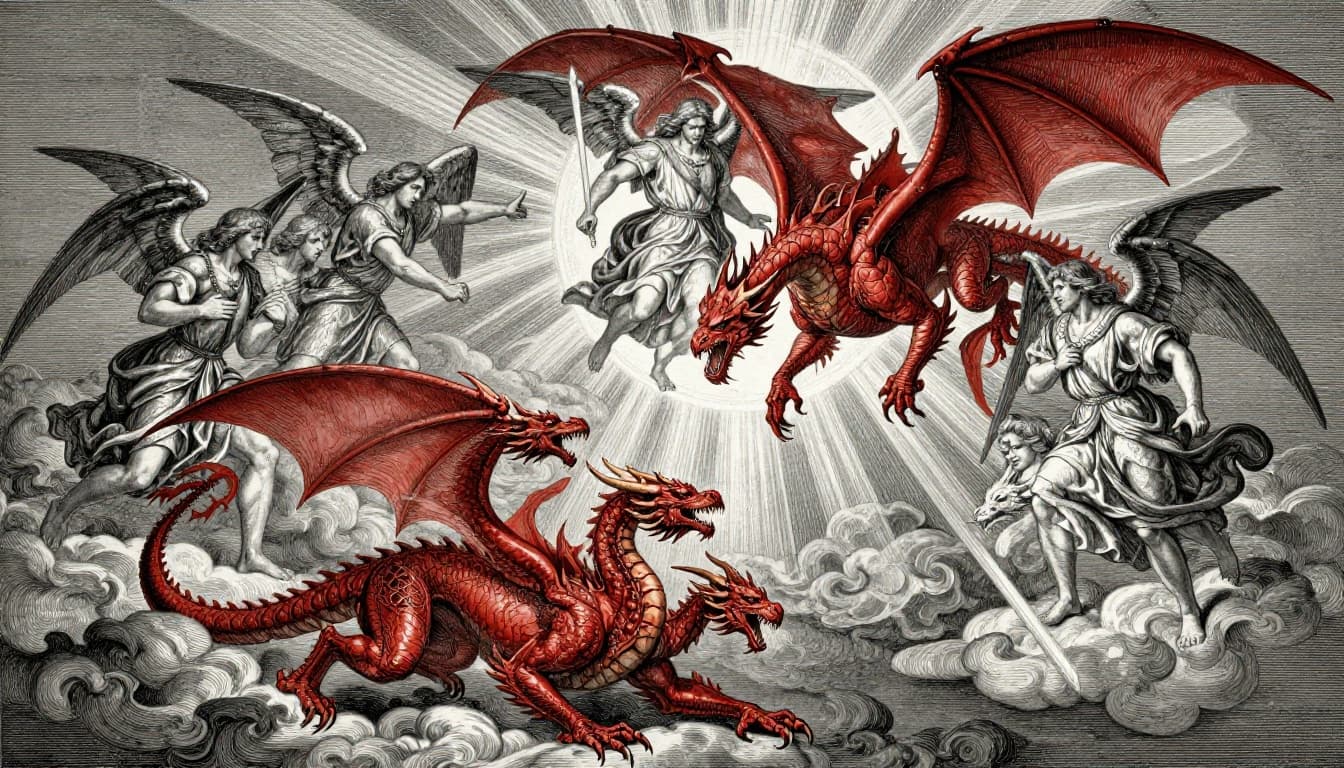
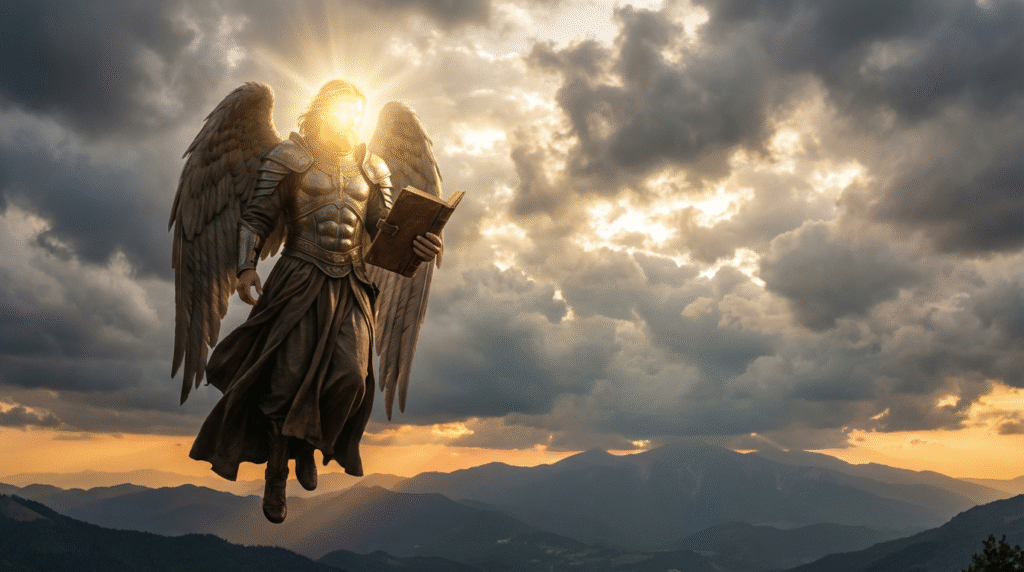
Next, John sees the war in heaven, where Michael and his angels fight the dragon and his angels. This serpent of old, called the Devil and Satan, who is the accuser of our brethren, loses his place in heaven and is cast out of heaven.
This moment helps you read the news without panic. Some turmoil is human sin on display. Other turmoil has a spiritual driver behind it. Revelation 12 says both are true, and it shows the order of events.
In a dispensational view, this casting down happens during the Tribulation, not before the Church age. It also explains Satan’s “short time” fury on earth. He knows the clock is running.
Notice the worship response in the chapter. Heaven celebrates, not because war is pleasant, but because the outcome is settled. The saints overcome by the blood of the Lamb and by the word of their testimony. That’s not hype. It’s the center of Christian endurance, rooted in faith in Jesus Christ during seasons of spiritual warfare. The blood speaks of Christ’s finished work. The testimony speaks of faithful witness under pressure.
The passage also clarifies that Revelation is prophecy. It’s not just a code for inner feelings. It’s a prophetic unveiling of conflict, victory, and coming judgment. If you want to see how dispensational readers handle the timing questions around verse 12, the discussion at Christianity Stack Exchange on Revelation 12:12 is a useful snapshot of the issue.
How God protects people in war seasons (Revelation 12:13-17)
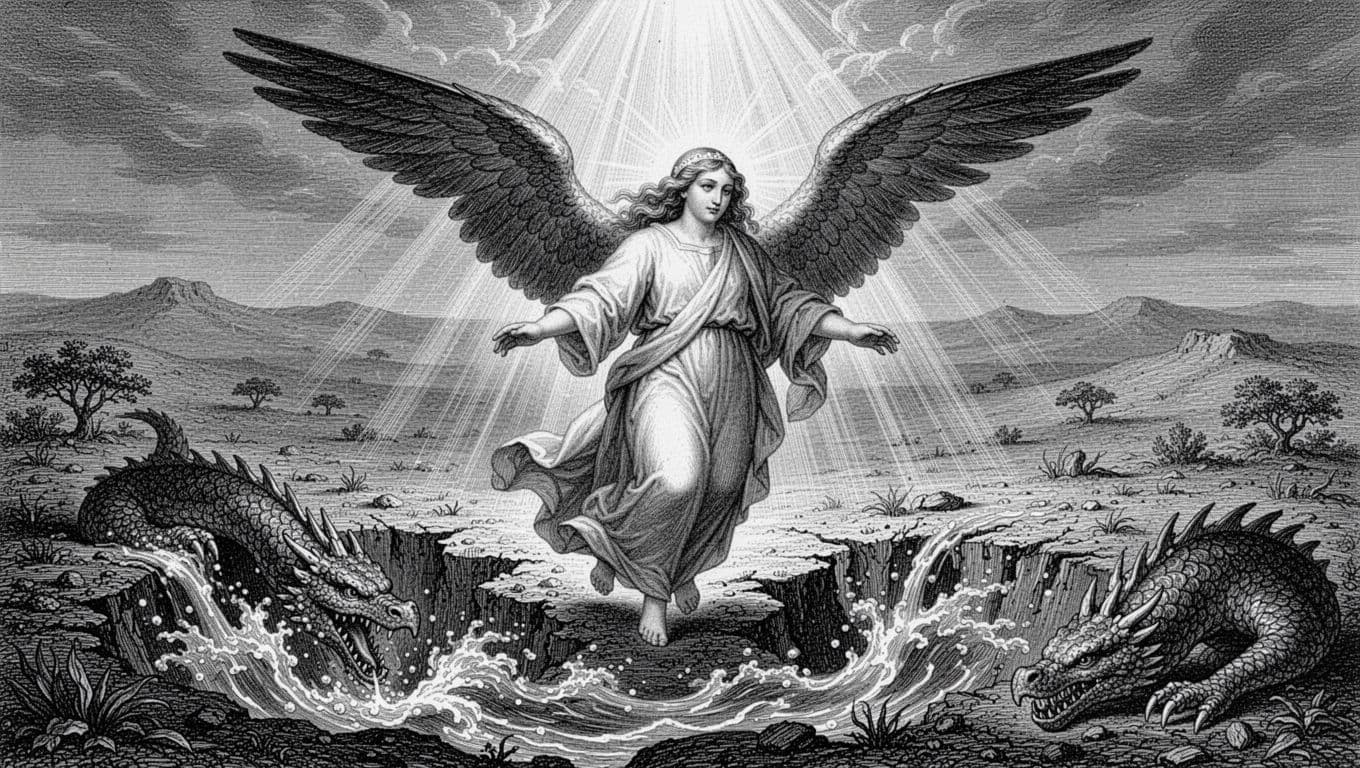
After the great red dragon is cast down, he persecutes the woman. This is a direct picture of Israel under end times assault, especially triggered by the Antichrist and the abomination of desolation in the second half of the Tribulation. Yet the chapter highlights God’s protection with calm detail: the woman is given “two wings of a great eagle,” so she might fly into the wilderness to her place prepared there, where she is nourished for a time, times, and half a time.
The point isn’t that Israel grows wings like a bird. The image signals strength and rescue, like the Exodus language where God bore Israel “on eagles’ wings.” God uses means. He moves people. He opens routes. He sustains them for the exact length of time He sets.
Then the serpent of old spews a flood after the woman, and the earth helps her by opening its mouth to swallow the river. Even creation responds to God’s purpose. The great red dragon’s plans are aggressive, but they’re not ultimate.
Finally, the great red dragon turns to “the rest of her offspring,” those who keep God’s commandments and hold to Jesus’ testimony. In the Tribulation context, this includes believing Jews and Gentiles who come to faith after the Church’s removal, often called Tribulation saints. God’s protection remains a major theme even for them amid intense persecution.
So how does this help you in a present war season?
First, it reframes the fight. Some pressure is more than personality conflict. Second, it anchors you in God’s care. A prophetic mindset doesn’t mean chasing headlines. It means staying faithful, watchful, and steady because Christ reigns.
God’s protection doesn’t always look like escape. Sometimes it looks like provision in the wilderness.
Conclusion
Revelation 12 explained in the NKJV shows a real enemy, a real conflict, and a real God who keeps covenant promises. In dispensational theology, the woman points to Israel in the Great Tribulation, the dragon to Satan, and the timeline to the Tribulation’s darkest stretch. Jesus Christ stands as the ultimate victor who rules with a rod of iron. Still, the chapter also strengthens anyone facing a war season today: God prepares refuge, sets limits, and sustains His people. Hold to Jesus’ testimony, which embodies the word of their testimony; embrace God’s protection, keep your heart clean, and wait for the Messiah as Scripture shapes your expectations while the end times draw nearer.