If Revelation 9 has ever made your stomach drop, you’re not alone. The chapter is intense, with images of the Abyss, strange locusts from the Fifth Trumpet, and a terrifying war scene from the Sixth Trumpet. Yet fear isn’t the point. John recorded these visions to tell the truth about God’s judgment, human rebellion, and God’s control over history.
This post offers Revelation 9 explained in a clear, Bible-aligned way, using the NKJV wording and a dispensational framework. You’ll see what the fifth and sixth trumpets mean, why the details matter, and how to read the chapter with a steady heart.
Where Revelation 9 Fits in the Trumpet Judgments (Revelation 8 to 9)
Revelation 9 sits inside a larger chain of events that begins in Revelation 4. John is taken up to see God’s throne room, then the Lamb opens the sealed scroll (Revelation 6). After the seals, the trumpet judgments begin (Revelation 8). By the time you reach Revelation 9, the tone has shifted from warning shots to something heavier.
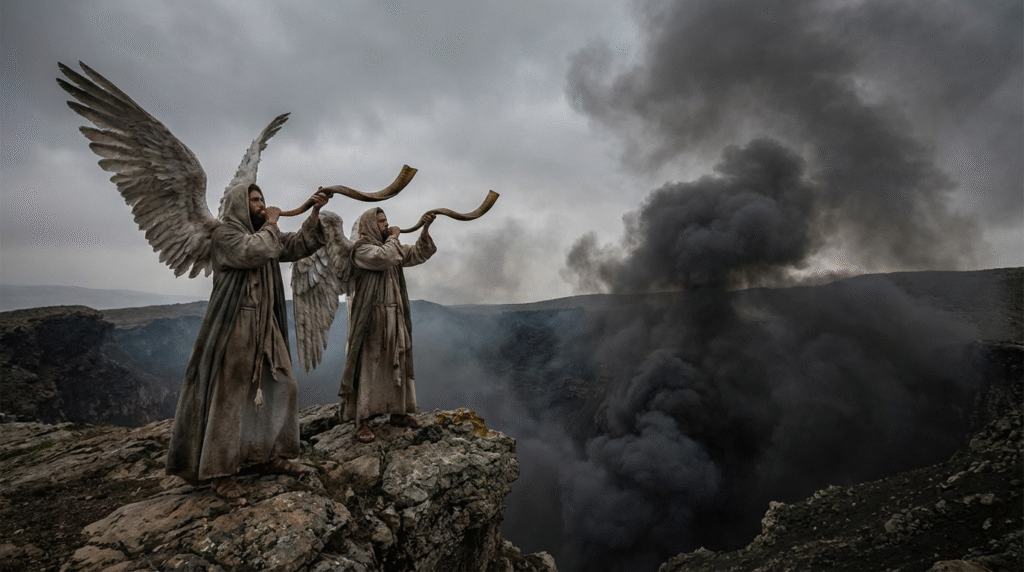
In Revelation 8:13, an angel announces the Woe Trumpets. Revelation 9 covers the first two. That matters because the Bible itself signals an increase in severity. The Fifth Trumpet is the first woe, unleashing torment from The Abyss (also called the Bottomless Pit); the Sixth Trumpet is the second woe, and the seventh trumpet (later) brings the third.
From a dispensational viewpoint, these trumpets describe real judgments that fall during the Great Tribulation, the final “week” connected to Daniel’s prophecy (Daniel 9:24-27). In that reading, Revelation 4 through 22 moves forward in a general sequence, even though some passages pause to explain key people and events.
So how should you read a chapter packed with symbols?
Start with three simple habits:
- Read the text like a real message, because John wrote to real churches.
- Take details at face value unless the passage signals a symbol.
- Let other Scriptures guide you, since Revelation echoes Exodus, Daniel, Joel, and the Gospels.
Many people also learn best with help from a trusted pastor, teacher, or even a Christian Seer who stays submitted to Scripture. Guidance helps, but the Bible stays the final authority.
The Fifth Trumpet (First Woe): Demonic Locusts From the Abyss and Five Months of Torment
Revelation 9:1 opens the Fifth Trumpet with “a star fallen from heaven to the earth.” In context, this Fallen Star acts like a person, because he receives the Key of the pit to the Bottomless Pit (The Abyss). That points to a personal being, not a meteor. The scene also matches the Bible’s broader picture of spiritual beings with ranks and assignments.
When the Bottomless Pit opens, smoke pours out “like the smoke of a great furnace” (Revelation 9:2, NKJV). The image feels like a door to a prison has swung wide, and the air itself changes. Out of that smoke come Demonic Locusts, but these aren’t ordinary insects. John describes them with Breastplates of iron, human-like faces, hair, Lion teeth, and tails like Scorpions (Revelation 9:7-10). Their sound is “like chariots with many horses,” and their stingers function like Scorpions.
Even their mission is strange. They don’t attack vegetation, which normal locusts destroy. Instead, they are told not to harm the earth’s plants, but to torment people “who do not have the Seal of God on their foreheads” (Revelation 9:4). The Torment lasts Five Months, and it is so severe that people “will seek death and will not find it” (Revelation 9:6). This Five Months of Torment targets only the unsealed.
Two details keep fear from taking over.
First, God sets strict limits. The Demonic Locusts can’t kill. They also can’t touch those with the Seal of God, which connects naturally to Revelation 7.
Second, these creatures answer to a king: “the Angel of the Abyss,” named Abaddon in Hebrew and Apollyon in Greek, the King over them, meaning “Destroyer” (Revelation 9:11). That title fits a demonic ruler. Still, even the Destroyer operates on a leash, because God controls the key, the timing, and the boundaries for the Bottomless Pit.
The Sixth Trumpet (Second Woe): The River Euphrates, the Four Angels, and a Call to Read Without Panic
The Sixth Trumpet begins with a voice from the Golden Altar telling the sixth angel to release the Four Angels who are bound at the great River Euphrates (Revelation 9:14). Binding language matters. Holy angels are not shown as prisoners in Scripture, but evil spirits are (compare 2 Peter 2:4 and Jude 6). So many dispensational readers understand these Four Angels at the River Euphrates as fallen angels held back until an appointed hour.
Unlike the torment unleashed in the first woe from the Bottomless Pit, this judgment from the River Euphrates turns deadly. The released Four Angels lead an army of Two Hundred Million. John says he “heard the number” of the Two Hundred Million (Revelation 9:16). The troops ride horses with vivid, terrifying features. Fire smoke and brimstone come out of their mouths, and by these plagues they kill a third of mankind (Revelation 9:17-18). Their tails are “like serpents,” and they harm with both mouth and tail (Revelation 9:19). The passage reads like warfare touched by the demonic, whether the army is entirely supernatural or includes human forces under dark power, with fire smoke and brimstone continuing to kill a third of mankind.
After the slaughter, the chapter lands on a sobering point: the survivors did not repent. They worship demons and serve idols of gold, silver, stone, and wood, which cannot see or hear. They did not repent of murders, sorceries, sexual immorality, or thefts, continuing to worship demons even after such torment. That last word can include occult practice and the kind of spiritual counterfeit that tries to control reality without God.
This is where many readers need a steady grip on the Woe Trumpets, including this Sixth Trumpet from the Golden Altar and the Bottomless Pit contrasts. Revelation 9 is prophetic, but it is not written to create panic. Here are a few guardrails that keep your mind clear:
- Notice God’s control: the Four Angels at the River Euphrates are “prepared for the hour and day and month and year” (Revelation 9:15).
- Let the chapter warn you, not thrill you: prophecy is meant to wake people up, not entertain them.
- Avoid date-setting: the text gives sequence and meaning, not a calendar.
- Keep the gospel in view: judgment is real, but so is mercy for those who turn to Christ.
Revelation is about end times, yes, but it is also about God’s patience and justice meeting at last.
Conclusion: Let Revelation 9 Produce Faith, Not Fear
Revelation 9 doesn’t ask you to guess every detail. It asks you to see the seriousness of rebellion and the certainty of God’s rule. The Fifth Trumpet unleashes torment from the Bottomless Pit, also called the Abyss, limited to five months. The Sixth Trumpet then releases death on a massive scale from the Bottomless Pit and the Abyss, yet multitudes did not repent.
These scenes preview the Great Tribulation, where humanity tragically did not repent despite the escalating judgments.
Read the chapter with your Bible open, your timeline grounded in Scripture, and your hope anchored in Christ. If Revelation 9 stirs fear, let that fear push you toward trust, prayer, and a fresh commitment to walk in the light.