Have you ever noticed how a room can go quiet right before something big happens? Revelation 8 reads like that moment. After the rising tension of the first six seals, the next scene doesn’t open with noise, it opens with Silence in heaven.
This post offers a clear, Bible-aligned, dispensational look at Revelation 8 explained (NKJV). When the Lamb opened the seventh seal, the story shifts dramatically. We’ll walk through the seventh seal and the first trumpet judgments (NKJV) to understand the altar scene and the coming shifts in John’s vision.
Where Revelation 8 fits in John’s prophetic timeline
Revelation 4 shifts the reader into Heaven, where John sees God’s throne and the worship around it. In a dispensational reading with a literal interpretation, this section sets the stage for the coming Great tribulation, the “day of the Lord” judgments that unfold on the earth in the end times. John is watching history move toward its final crisis, and he’s shown it in a series of set pieces.
By Revelation 5, a scroll sealed with seven seals appears in the right hand of the One on the throne. The Lamb, Jesus Christ, is the only One worthy to open it. That matters because the judgments that follow are not random disasters. They are righteous acts from the Judge of all the earth that unleash the Wrath of God, carried out by the Lamb who was slain and is now reigning.
Revelation 6 and 7 build pressure. The first seals bring conquest, war, famine, and death, then martyrdom and cosmic signs. Revelation 7 pauses the action to show the sealing of 144,000 from Israel and a vast multitude in Heaven. That “pause” is still part of the story, because it answers a key question, who can stand?
Then Revelation 8 arrives and opens the seventh seal. And here’s the important story point: the seventh seal doesn’t feel like a single event. It opens the door into the seven trumpets. In other words, the seventh seal functions like a wrapper that contains the next wave.
If you read Revelation like a steady drumbeat, chapter 8 is the moment when the beat changes and the sound deepens.
The seventh seal (Revelation 8:1-5), silence, incense, and fire
“When He opened the seventh seal, there was silence in heaven for about half an hour” (NKJV). That line is easy to skip, but it’s loaded. Heaven has been filled with singing, proclamation, and thunder-like worship scenes. Now it goes quiet. It reads like a courtroom when the judge stands, or like the hush before a trumpet blast on a battlefield.
The silence isn’t empty. It frames what comes next.
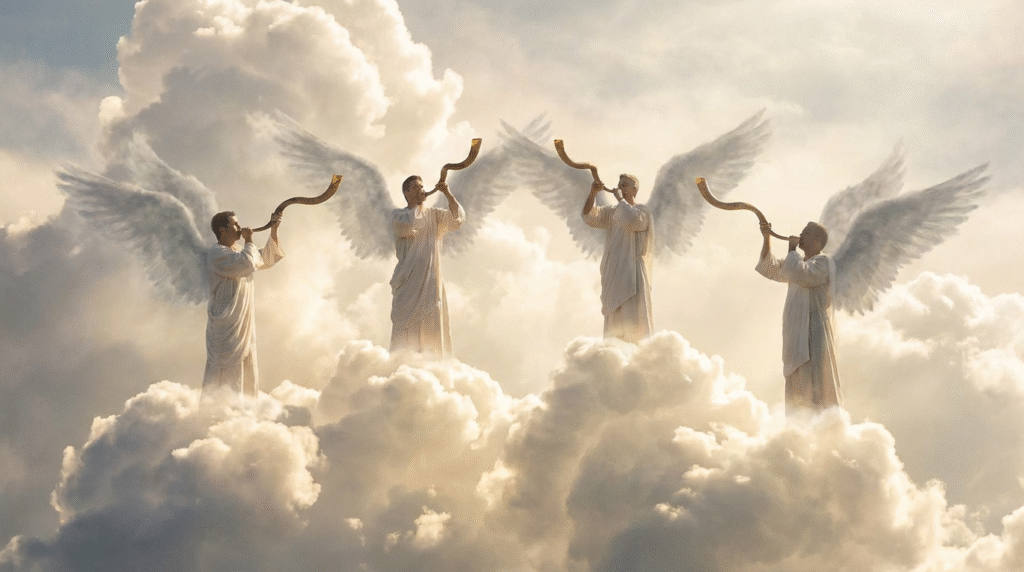
John then sees the seven angels who stand before God given seven trumpets. Trumpets in Scripture often connect with public announcement, warning, and holy war themes. They signal that something is being declared, and it will be heard.
Next, another angel comes to the altar with a golden censer. He’s given much incense to offer “with the prayers of the saints” on the altar of incense, the golden altar before the throne. The smoke of the incense rises before God. This is a strong picture: the suffering, cries, and pleas of God’s people are not lost in history. They rise into the throne room.
This part of Revelation 8 also guards us from a common mistake. The coming judgments are not God losing control, and they are not Satan running wild without limits. The scene shows order, timing, and purpose. Even the prayers of the saints are part of the prophetic sequence.
Then the tone turns sharp. The angel fills the censer with fire from the altar and throws it to the earth. John hears noises, thunderings, lightnings, and an earthquake. The quiet has ended. Heaven has acted, and earth will feel it.
For readers who follow John’s visions closely, this is a hinge point. The seals showed escalating trouble. The trumpets will show targeted, measured strikes that hit the world’s systems and resources.
The first four trumpet judgments (Revelation 8:6-13) and what they strike
When the trumpets begin, the focus shifts from social collapse (war, famine) to the created order itself. These are not vague metaphors in the text. John describes visible results: burned land, poisoned water, darkened light.
First trumpet: land and vegetation hit (Revelation 8:7)
Upon the sounding of the first trumpet, hail and fire mixed with blood are thrown to the earth. The third of the trees burn up, and all green grass burns in the destruction of the vegetation. The scale is massive, but it’s also limited. The repeated “one-third” matters. God’s judgment is real, yet it is not the final, total end at this point. It’s restraint with intent.
Second trumpet: the sea struck (Revelation 8:8-9)
A burning mountain is thrown into the sea. A third of the sea becomes blood, a third of sea creatures die, and a third of ships are destroyed. If the first trumpet shakes food supply on land, the second shakes trade and life at sea.
Third trumpet: fresh water poisoned (Revelation 8:10-11)
A star fell from heaven, burning like a torch, and it lands on a third of the rivers and springs. The star is named Wormwood, poisoning the fresh water supply, and many die from the bitter water. The judgment reaches daily survival, because fresh water is not optional.
Fourth trumpet: light reduced (Revelation 8:12)
A third of the sun, moon, and stars are struck, so a third of the day and night are darkened. These trumpet judgments echo the plagues of Egypt, showing creation order disrupted, as if the world is being shown what life feels like when it resists its Creator.
The chapter ends with an eagle (NKJV: “angel” in some manuscripts, but NKJV reads “eagle” in many editions) crying with a loud voice: “Woe, woe, woe” to signal the three woes because of the remaining trumpet blasts. The first four trumpets are severe. The last three are worse.
What changes in the story after Revelation 8
Revelation 8 doesn’t just add new judgments, it changes how the book feels.
First, the action moves from seals to trumpets, and the trumpet judgments read like warnings as well as punishments. In the Bible, trumpets can call people to attention. These blasts announce to the inhabitants of the earth that the world is heading toward a final accounting.
Second, the target changes. The earlier seals show human conflict and societal breakdown. The trumpets strike land, sea, rivers, and sky. Creation itself becomes a stage for God’s message. The world that people trust (food chains, water systems, commerce routes, and even the rhythms of day and night) gets shaken.
Third, the pattern becomes clearer: Heaven acts, earth responds. Revelation 8 opens with worship and priestly imagery, incense, altar, and prayers. Then the seven angels who stand before God receive the trumpets, and the fire is thrown down. The point is simple but sobering, what happens on earth is tied to what God decrees in Heaven.
Here’s a quick way to see the shift:
| Sequence | What it feels like | What it introduces |
|---|---|---|
| Seals (Rev 6-8:1) | Unraveling within human history | The scroll’s judgments begin |
| Seventh seal (Rev 8:1-5) | Silence, then altar fire | Seven trumpets |
| Trumpets (Rev 8 onward) | Direct blows to creation and systems | Escalation and three “woes” |
For those who serve others in discernment, including a Christian Seer, Revelation 8 is a reminder that true prophetic insight stays anchored to Scripture. John isn’t guessing. He’s reporting what God shows him, in a structured prophecy with moral clarity. The chapter also keeps our hearts steady: God hears prayer, God measures judgment, and God will finish what He began.
Conclusion
Revelation 8 (NKJV) marks a turning point: the Seventh seal opens into silence, worship, and then fire, and the first Trumpet judgments begin to strike the world in measured thirds. The story narrows from broad trouble to direct, announced acts of judgment, and it sets up the harsher “woes” still ahead. If you’re reading Revelation chapter by chapter, let this moment slow you down and sober you up. The prophetic message is not just about the Wrath of God coming upon the inhabitants of the earth, it’s about Who is in control when it comes.