If Revelation feels like a storm of symbols, Revelation 7 is a moment where the wind stops and you can hear what matters. John has already watched the Lamb open six seals, and the world below reels under judgment. Then, before the next wave breaks, God pauses the action.
Revelation 7 Explained (NKJV) is easily explained. God knows who belongs to Him. He marks them, and He keeps His promises. Even in the end times, His promises are true.
Walking through John’s visions from Revelation 4 onward is an exciting path. Chapter 7 answers three big questions. First, who are the 144,000? Second, who is the great multitude. Third, what it mean to be “sealed” in the NKJV?
Why Revelation 7 is a pause in judgment, not a change of subject
Revelation 7 sits between the sixth and seventh seals. Chapter 6 ends with people crying out that the wrath of God has come and asking, “who is able to stand?” Chapter 7 responds with a clear picture: God can hold back judgment long enough to secure His servants, and He can bring a countless number through tribulation into worship.
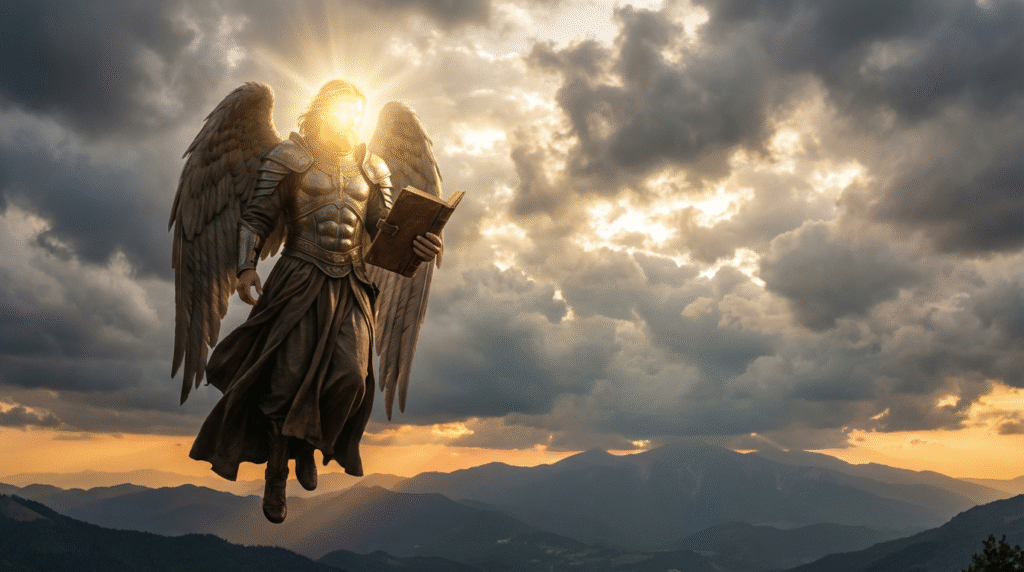
John sees four angels “standing at the four corners of the earth,” holding back the four winds. The image is simple. Think of a hurricane held in place by God’s hand. The winds are ready, but they don’t move until another angel announces God’s order: don’t harm the earth “till we have sealed the servants of our God on their foreheads.”
Dispensational theology reads this as part of the coming Tribulation period, connected to the broader prophetic timeline that unfolds in Revelation. The pause is mercy inside judgment. It shows God is never reacting, never rushed, never out of control in His judgment.
For a quick chapter-level summary, see BibleRef’s explanation of Revelation 7, then come back and read the chapter again with the “pause” in mind.
What “sealed” means in Revelation 7 (NKJV)
In Scripture, a seal marks ownership, identity, and protection for a purpose. In Revelation 7, the seal is “of the living God.” That means the mark is not random and not merely symbolic. It publicly identifies God’s servants in a time when the world will be choosing sides.
This sealing, reminiscent of the marking in Ezekiel 9 for safety, does not say they’ll never suffer. It does say they are set apart with the protection of God during the tribulation, kept for God’s plan, and not lost in the chaos. In the language of prophecy, it’s God putting His signature on His people before the next judgments arrive.
The 144,000 in Revelation 7: sealed Israelites with a defined mission
John “heard the number” of those who were sealed: 144,000, with 12,000 from each tribe listed (Revelation 7:4-8, NKJV). The text goes out of its way to name the tribes of Israel and count people, starting with the tribe of Judah. That detail pushes many dispensational readers to take the group as literal Israelites, not a vague label for the church or a symbolic reading of spiritual Israel.
That matters because Revelation consistently distinguishes groups. The church is pictured in heaven earlier (Revelation 4-5), while Israel appears on earth in the Tribulation narrative. Revelation 7 fits that pattern: a Jewish remnant of 144,000 from the tribes of Israel is numbered and sealed, then a separate, unnumbered crowd from all nations is seen worshiping.
You might notice something else: the tribal list is not a standard Old Testament list. Dan is missing, and Joseph appears alongside Manasseh. Scripture doesn’t explain every reason for the list’s exact form, so it’s best not to force certainty where the text stays quiet. What is clear is John’s emphasis: these are “of all the tribes of the children of Israel.”
So what are they for? Revelation 7 calls them “servants.” Many dispensational teachers connect that to a future Jewish witness during the end-times, a prophetic counterpart to earlier gospel witness, but now under intense global pressure. Some see the 144,000 as the first fruits of the harvest during this period. God has always kept a remnant, and this looks like a marked remnant with a task.
If you want another perspective that walks through the main interpretations, read Crossway’s article on the 144,000 in Revelation 7. Use it as a comparison point, then weigh it against the plain wording of the NKJV.
The great multitude: a global crowd saved out of the Great Tribulation
Right after John hears the count of the sealed, he looks and sees something no one can tally: “a great multitude which no one could number, of every nation, tribe, people and language” (Revelation 7:9, NKJV). The contrast is sharp on purpose.
- The 144,000 are numbered, tribe by tribe.
- The great multitude is uncounted, drawn from the whole world.
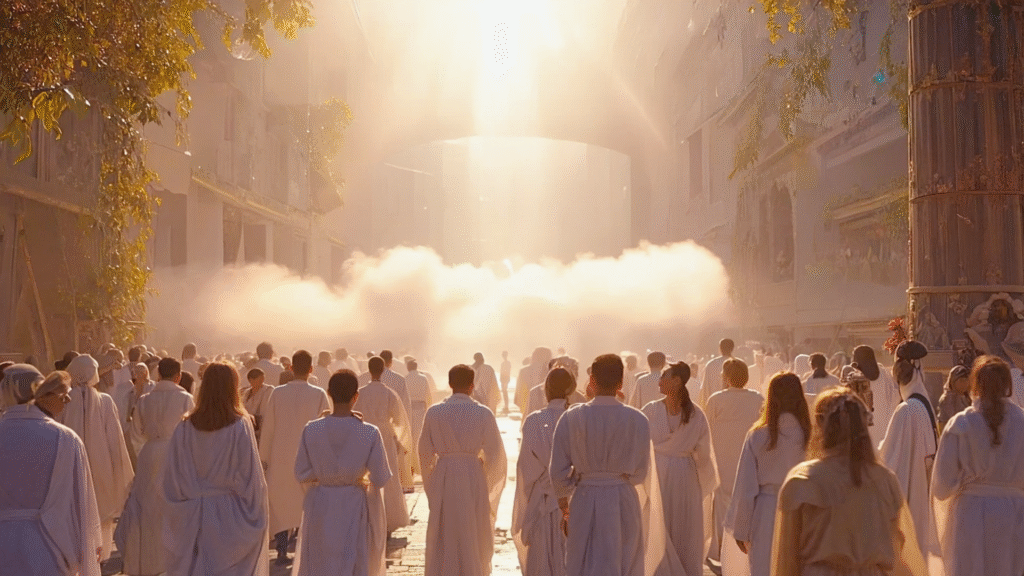
They stand before the throne and before the Lamb, clothed in white robes, with palm branches in their hands. Their worship is loud, simple, and centered: “Salvation belongs to our God.” In the middle of end times upheaval, heaven is not confused about the main point. The Lamb saves.
Then one of the elders explains who they are: “These are the ones who come out of the great tribulation, and washed their robes and made them white in the blood of the Lamb” (Revelation 7:14, NKJV). In dispensational thought, this points to people who come to faith during the tribulation, often at great cost under the Antichrist’s global pressure. Many will be martyred, yet they arrive in victory, not defeat. Unlike the view held by Jehovah’s Witnesses, who see salvation as limited to the 144,000, this great multitude shows God’s expansive mercy.
This also answers a fear many people carry when reading prophetic passages: “Will anyone be saved then?” Revelation 7 says yes, in numbers too large to count, from every people group. God’s mercy reaches farther than human maps.
For background on this “all nations” language, see GotQuestions on the great multitude in Revelation 7:9.
The closing promises are tender: no more hunger, no more thirst, no scorching heat. The Lamb will shepherd them, and God will wipe away every tear, securing their eternal life. Revelation is not only about judgment. It’s also about the Shepherd gathering bruised survivors into safety.
Conclusion: sealed people, a saving Lamb, and hope that holds
Revelation 7, as apocalyptic literature, doesn’t soften the reality of the end times, but it does show God’s calm authority inside it. The 144,000 show that God still knows Israel and can set apart His servants for a specific prophetic purpose. The great multitude, redeemed from the earth, shows that the gospel will still save, even in the darkest stretch of history. And the word sealed reminds you that God’s mark is stronger than the world’s pressure.
If you’re reading Revelation in order, pause and reread chapters 6 through 8 as one unit. Then ask yourself: does your focus land where heaven’s focus lands, on the Lamb? A Christian Seer can offer encouragement, but Scripture itself gives the clearest guidance: stay close to Christ, because He is the center of every prophecy and every promise.