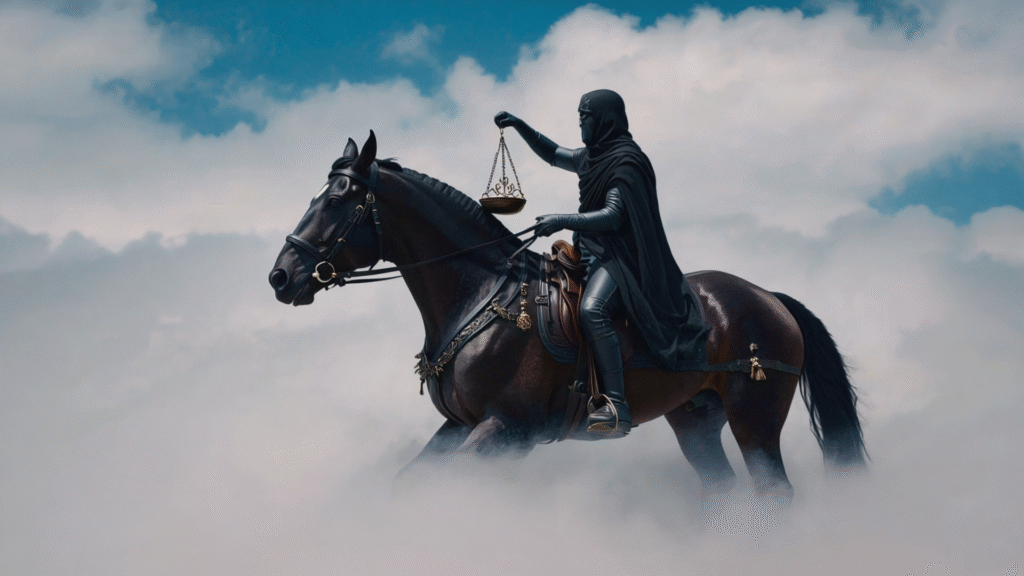
A black horse steps into John’s vision, and the mood changes fast. The first seals are unsettling, but the black horse revelation scene feels painfully close to everyday life: food, money, and the fear of not having enough.
Revelation doesn’t present this as a random disaster. In John’s prophetic vision, the Lamb opens a sealed scroll, and each seal releases a real judgment with real consequences. If you’ve ever wondered why the third seal centers on prices and scales, you’re asking the right question.
Where the Third Seal Fits in John’s End Times Timeline (Revelation 4 to 6)
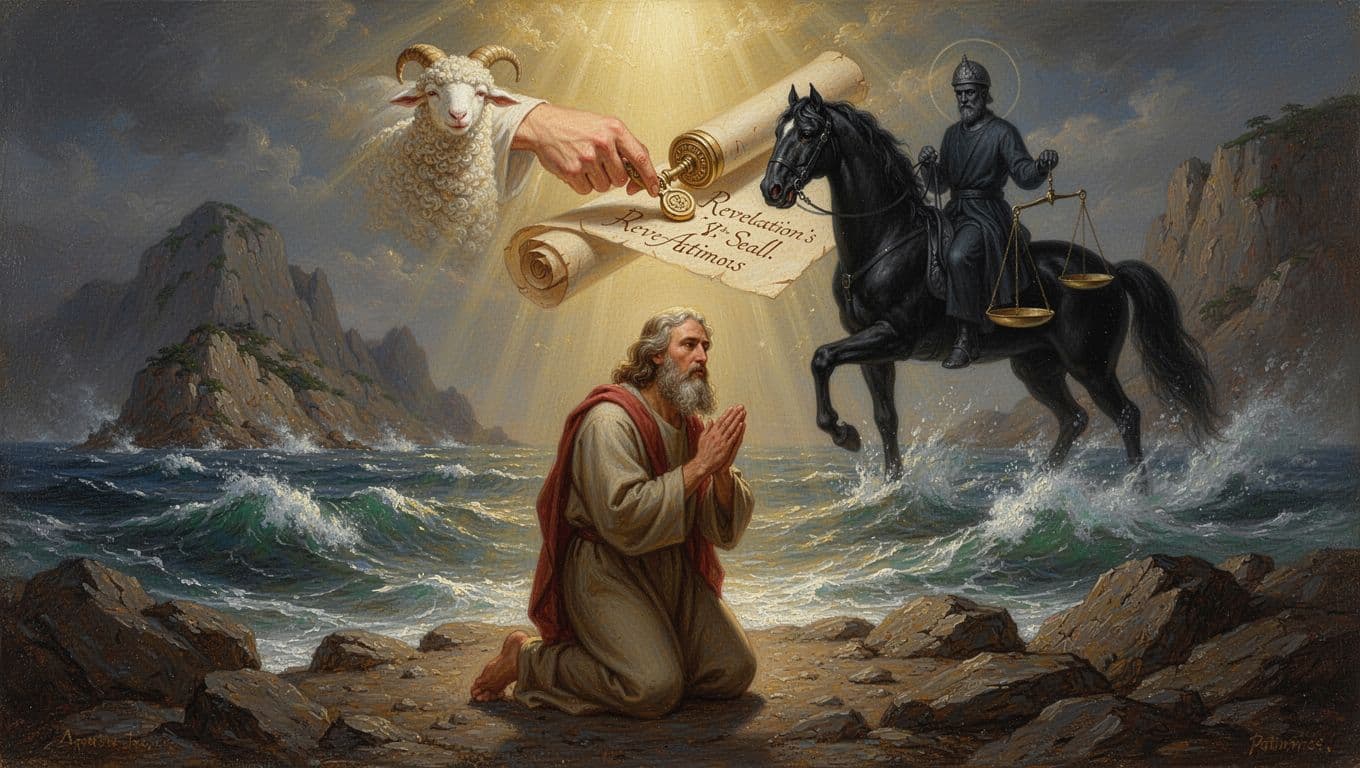
John’s visions begin to move in a clear sequence starting in Revelation 4, where he’s caught up to see God’s throne and the heavenly court. In Revelation 5, a scroll sealed with seven seals appears, and only the Lamb (Jesus Christ) is worthy to open it. When the Lamb opens the seals in Revelation 6, judgment unfolds step by step, not as chaos, but as controlled, permitted events.
From a dispensational view, these seal judgments belong to the future Tribulation period (often linked with Daniel’s 70th week). They are part of God’s end times program that brings the world to account and prepares for Christ’s kingdom. John isn’t writing symbolic poetry divorced from reality. He’s describing a prophetic chain of events that moves history toward a climax.
The third seal comes after the white horse (often associated with conquest and counterfeit peace) and the red horse (war and bloodshed). That order matters. War doesn’t just take lives, it breaks supply, destroys fields, blocks trade routes, and burns through savings. Famine and economic collapse often follow conflict like smoke follows fire.
If you want a broad historic Christian perspective on the passage while you study, it can help to compare viewpoints, for example Matthew Henry’s commentary on Revelation 6. Even when interpreters differ on details, the plain warning is consistent: judgment is real, and God is not guessing.
The Black Horse and the Scales: Famine, Inflation, and Rationed Survival (NKJV)
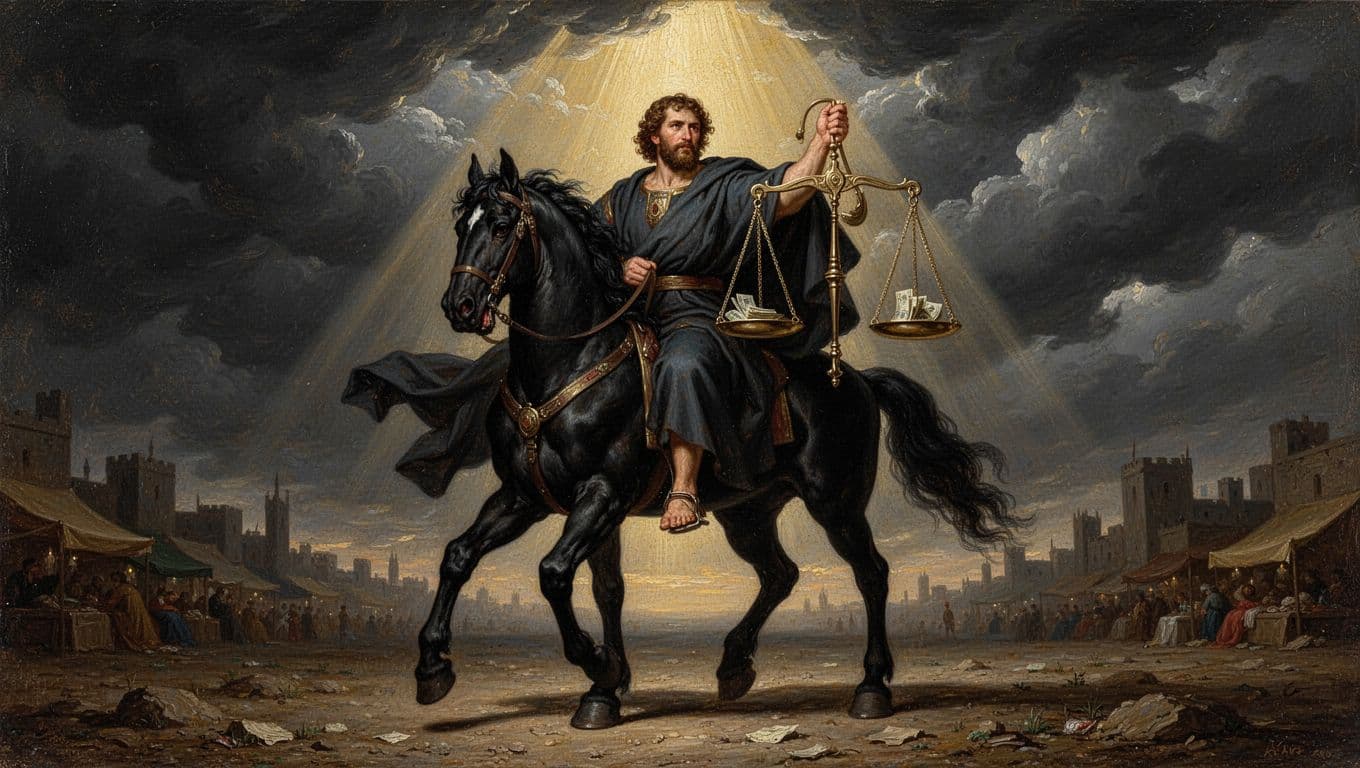
Revelation 6:5-6 (NKJV) describes the scene with simple, heavy words. John sees a black horse, and its rider holds “a pair of scales” (balances). Then a voice announces prices that sound extreme: “A quart of wheat for a denarius, and three quarts of barley for a denarius; and do not harm the oil and the wine!”
Those details are the key to the third seal’s meaning. The scales point to measured food, rationing, and scarcity. In a functioning market, people scoop grain freely. In famine, grain gets weighed like medicine. The voice sets the rates, and the rates crush the average person.
A denarius was commonly seen as a day’s wage for a laborer. If a full day’s pay buys only a quart of wheat, that’s not a tight month, it’s a survival crisis. Wheat was the better grain; barley was cheaper and often used for animals or the poor. Even barley is priced high. In plain terms, this judgment paints a world where working all day barely feeds one person, and a family’s needs become impossible.
This is why the black horse is often connected with famine, but it’s more than empty shelves. It’s economic breakdown: money still exists, work still exists, but the system no longer supports ordinary life. People don’t just fear hunger, they fear the math.
For a verse-by-verse study resource with cross-references, many readers use Precept Austin’s Revelation 6 commentary. Whatever helps you slow down and read carefully is worth your time here, because Revelation’s images are not vague when you let Scripture interpret Scripture.
“Do Not Harm the Oil and the Wine”: Judgment With Limits, and a World of Uneven Pain
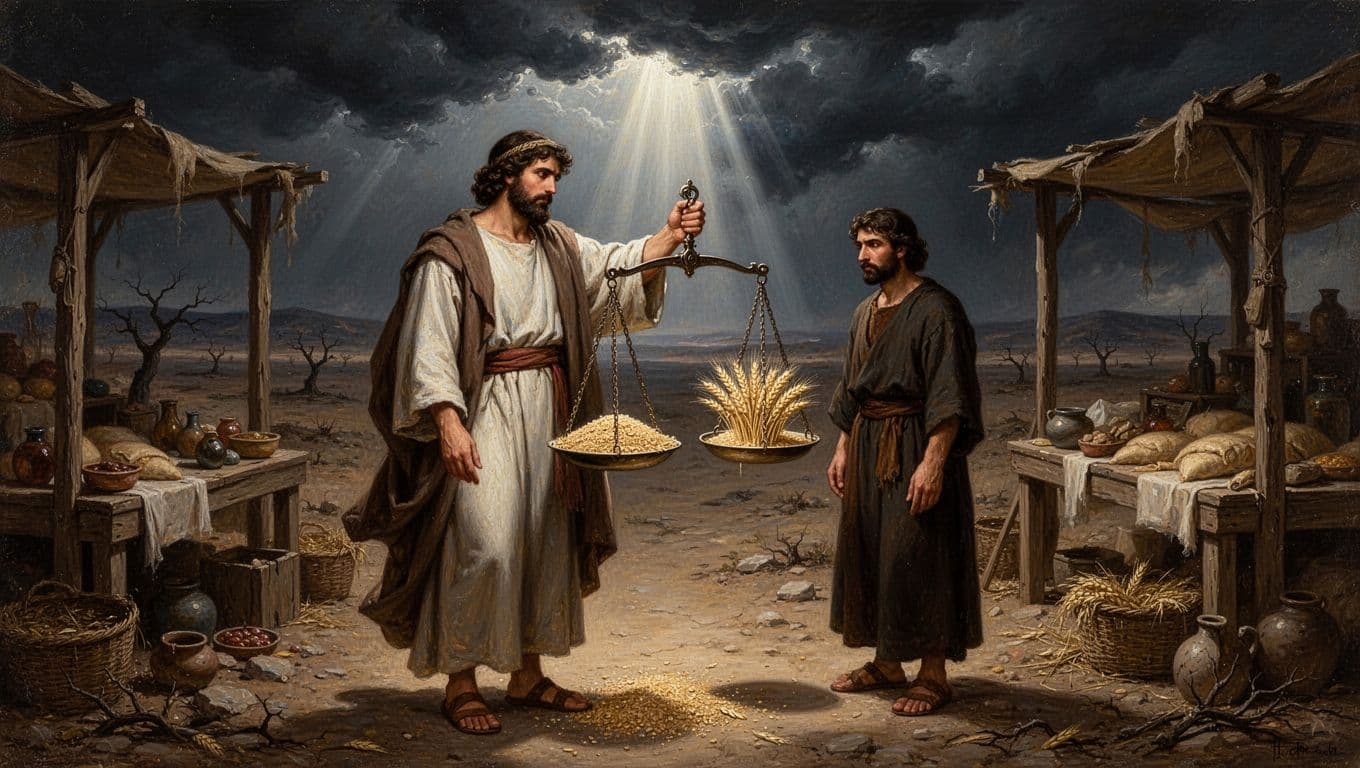
The final line of the third seal is easy to skip, but it’s loaded: “do not harm the oil and the wine!” Why mention oil and wine in a famine scene?
Some see this as a picture of partial restraint. God sets boundaries even in judgment. The earth is not allowed to collapse into total ruin at this point. Others see a hint of unequal suffering, where staples like grain become scarce while items tied to wealth or established stores continue. In many crises, the poor feel it first and hardest. The third seal’s pricing already leans that way: bread becomes a luxury, while certain goods remain protected.
There’s also a practical angle. Oil and wine come from olives and grapes, which grow on vines and trees, not like grain that can be burned or trampled in war. After conquest and conflict, fields can be destroyed quickly, but established groves might survive longer. Either way, the message is sobering: the world’s basics become unstable, and people discover how fragile their “normal” really was.
From a dispensational standpoint, this judgment is not the Church “earning karma” or humanity “fixing itself.” It’s God opening seals from the throne room. The Tribulation is a time of wrath and warning that presses the world toward a choice. It also prepares the stage for later judgments that intensify.
If you’d like a dispensational-focused discussion that connects the black horse with the broader seal sequence, see The Third and Fourth Seal Judgments for additional context.
For readers at Seer Visions, this is also where a Christian Seer’s posture matters. A Christian Seer doesn’t sensationalize prophecy or turn it into fear content. The goal is discernment, sobriety, and a closer walk with Christ, especially when studying prophetic passages tied to the end times.
Conclusion: What the Third Seal Should Do to the Reader
The black horse of Revelation isn’t a spooky symbol meant to entertain. It’s a warning that God can judge a world that trusts its systems more than its Savior, and that judgment can touch the most basic parts of life. The third seal shows famine, inflation, rationing, and controlled hardship, all under the Lamb’s authority.
Let it push you toward faithfulness, not panic. Read Revelation in order, keep Christ at the center, and ask God for wisdom to live steady in uncertain times. The same Lord who opens the seals is the Lord who saves.