
When people picture Revelation, they often jump to dragons, trumpets, and fire. But the pale horse might be the image that stays with you the longest, because it feels chillingly familiar. It looks like what happens when a broken world finally snaps.
In John’s vision, the Fourth Seal (Revelation 6:7–8, NKJV) isn’t written to entertain us or feed curiosity. It’s prophetic warning, and it’s also a reminder that Jesus Christ, the Lamb, still holds the scroll.
So what does the pale horse mean, and how should we read it with a dispensational view of the end times?
Where the Fourth Seal Fits in John’s Vision (Revelation 4–6)
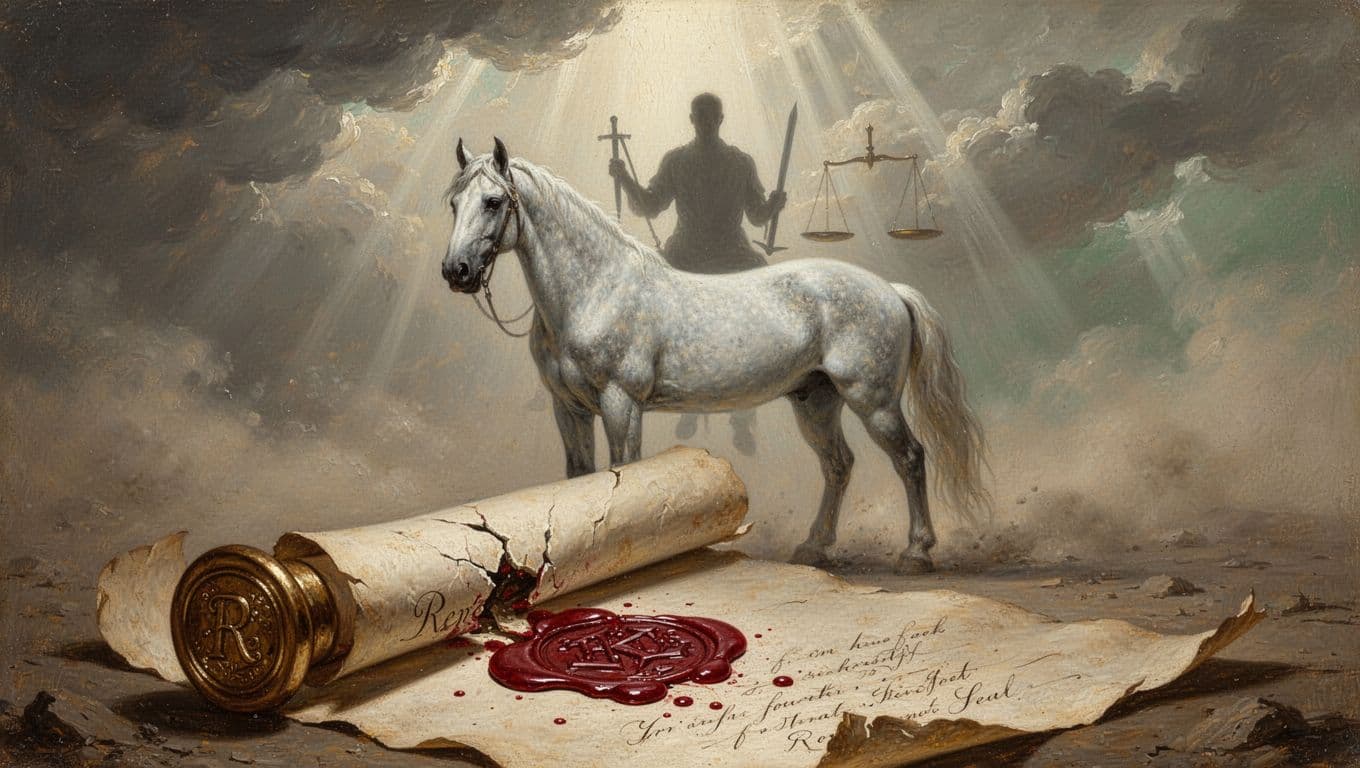
Revelation shifts gears in chapter 4. John is caught up to heaven, he sees the throne, he sees worship, and he sees a sealed scroll in the right hand of God. The point is simple: history is not drifting. Heaven isn’t reacting, heaven is ruling.
In chapter 5, only the Lamb is worthy to open the scroll. That matters when the seals start breaking in chapter 6. The judgments that follow aren’t “nature doing its thing” or “humans ruining everything” alone. They unfold under Christ’s authority.
The first four seals release four horsemen (Revelation 6:1–8). Many dispensational teachers understand these as early judgments of the coming Tribulation, the lead-up to stronger trumpet and bowl judgments later. The sequence also has a grim logic: conquest, war, famine, then death. Like dominos, each rider makes room for the next.
If you want a quick refresher on how the seals fit together, this overview of the seven seals in Revelation helps frame the larger pattern without getting lost in speculation.
This sets the stage for the fourth seal revelation, because by the time the pale horse rides, the world is already weakened, frightened, and unstable.
Revelation 6:7–8 (NKJV): What the Pale Horse Represents
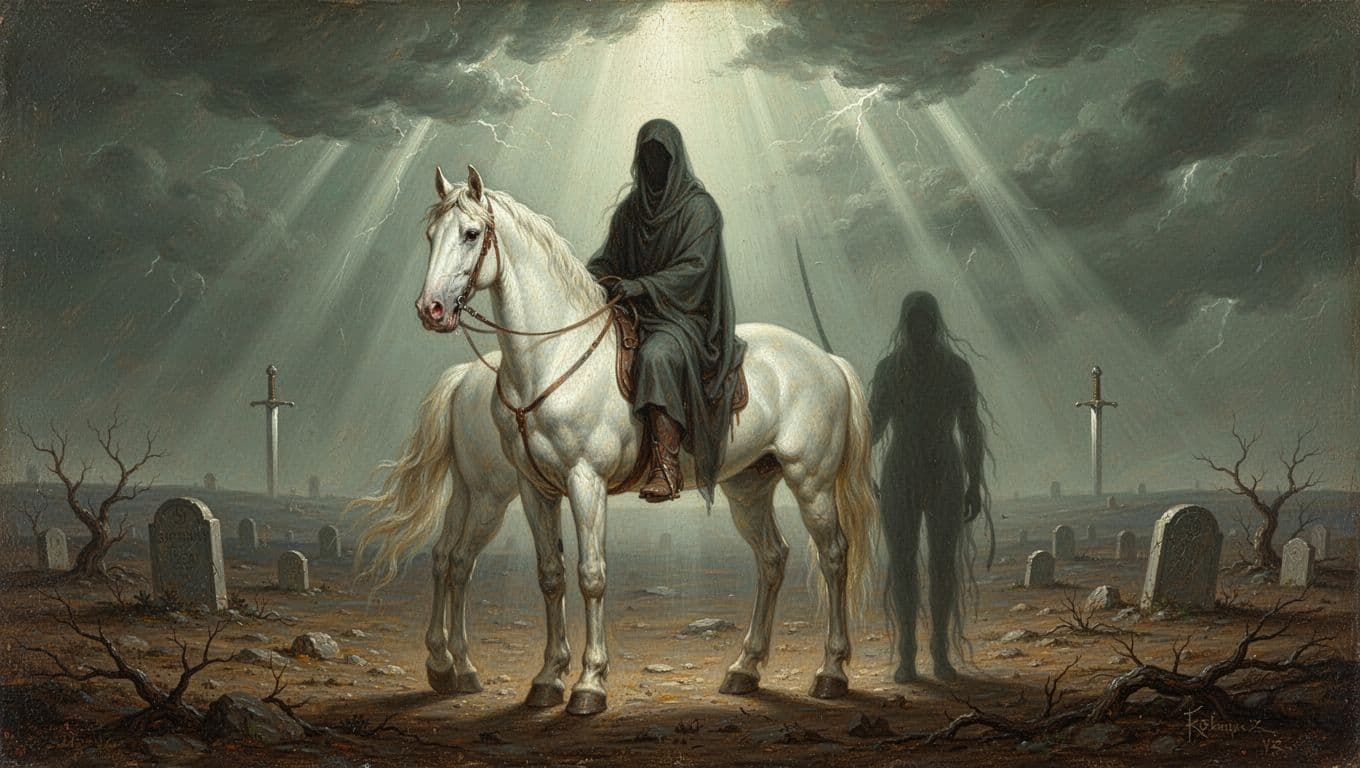
John writes that when the fourth seal is opened, he sees a “pale” horse. In the NKJV, the rider is named Death, and Hades follows with him. Authority is given to them over a fourth of the earth, to kill with sword, hunger, death, and beasts.
That one word “pale” does a lot of work. It doesn’t sound bold like the red horse. Also, it doesn’t sound rich like the black horse. It sounds sick. The color suggests an ashen, corpse-like shade, a picture of life draining away.
Also notice that Death rides, and Hades follows. In plain terms, death is the event, and Hades is the aftermath, the place of the dead. The text doesn’t present Death as a cute symbol. It’s a real agent in judgment, with a real trail behind it.
The four methods named in the verse echo patterns seen elsewhere in Scripture, including Old Testament judgment language. Read them like four tools in the same hand:
- Sword: violence, war, and slaughter
- Hunger: famine and collapse of food supply
- Death: plague, disease, and widespread dying
- Beasts: creation itself turning dangerous in chaos
For a verse-by-verse snapshot of how interpreters handle the wording, see this short explainer on what Revelation 6:7 means. Even when commentators differ on details, the plain sense remains: the pale horse signals a surge of death across the earth.
Dispensational Take: Tribulation Judgment, Not Random Chaos
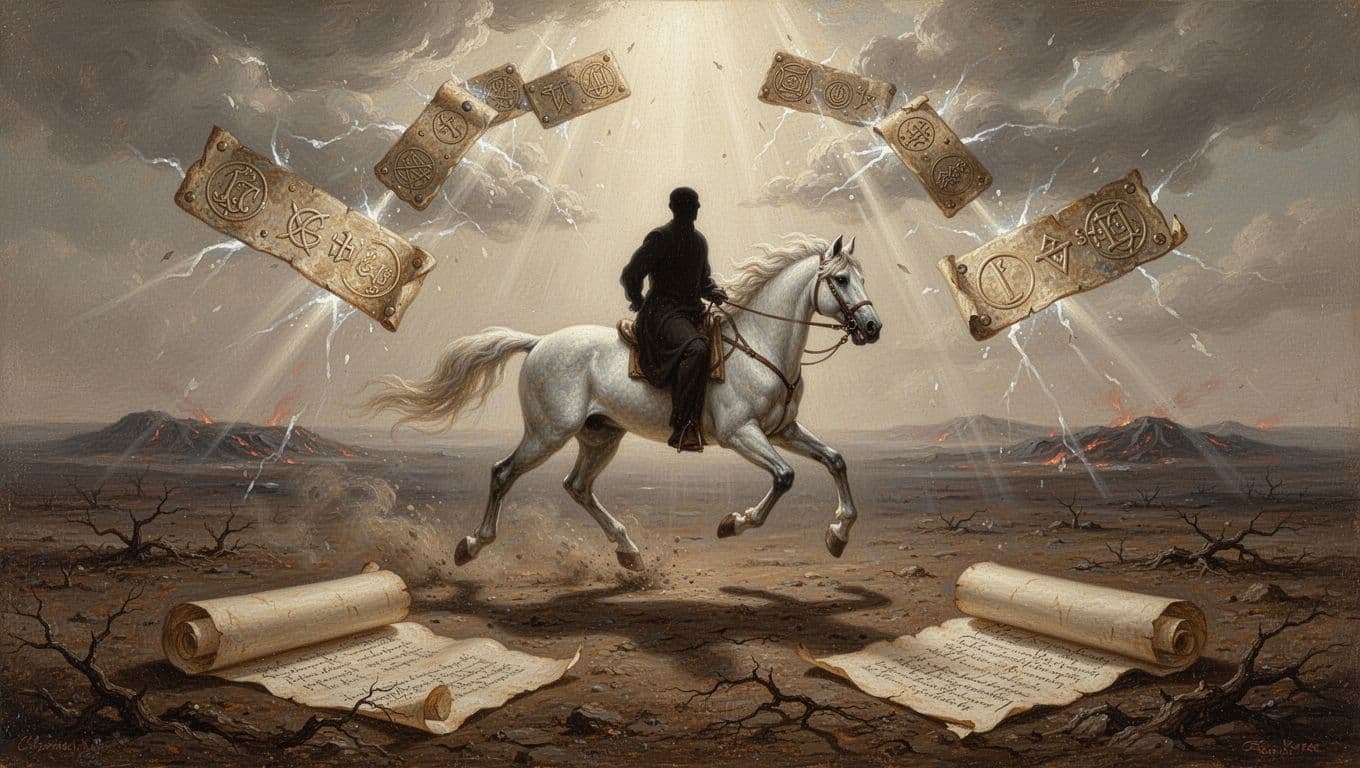
A dispensational reading takes Revelation’s seal judgments as future, global, and connected to Daniel’s 70th week (Daniel 9:27), often called the Tribulation. The Fourth Seal isn’t just a poetic way to describe “hard times,” it’s part of a timed series of judgments that intensify as the end times unfold.
Two guardrails help keep the meaning clear.
First, the Lamb opens the seal. That means the horsemen don’t outrun God. Even when the world feels abandoned, Revelation insists it isn’t. Judgment is measured, not endless. The text even gives a boundary, “a fourth of the earth.” That limit is terrifying, but it’s still a limit.
Second, the pale horse doesn’t ride alone in the story. It follows conquest, war, and scarcity. In other words, the Fourth Seal looks like a compounding collapse. When a society breaks spiritually and morally, the fallout becomes physical fast. Like termites in a house, damage can stay hidden, until the day the floor gives way.
Many readers also hear echoes of Jesus’ Olivet Discourse (Matthew 24), where He spoke of wars, famines, pestilences, and death as “the beginning of sorrows.” From a dispensational view, the seals align with that prophetic trajectory, moving toward the visible return of Christ in Revelation 19.
If you want a solid chapter-level guide to Revelation 6, this Revelation 6 commentary walks through the seals with helpful cross-references.
For those seeking clarity and comfort today, the Fourth Seal also has a pastoral edge. A Christian Seer isn’t called to hype fear, but to point people back to Christ, to repentance, and to steady hope. Prophecy was never meant to replace prayer. It was meant to sharpen it.
Conclusion: What the Pale Horse Still Says to Us
The pale horse of Revelation 6:7–8 (NKJV) pictures Death riding out under divine permission, with Hades following, during the coming Tribulation. In dispensational theology, it’s a sober marker in the unfolding timeline of the end times, and it warns us not to treat sin, violence, and spiritual drift as small things.
John’s vision isn’t telling believers to panic. It’s telling us to watch, worship, and cling to the Lamb who opens the seals. If the Fourth Seal unsettles you, let it drive you toward Jesus, because He is still Lord over history, and He’s still calling people to come to Him.