
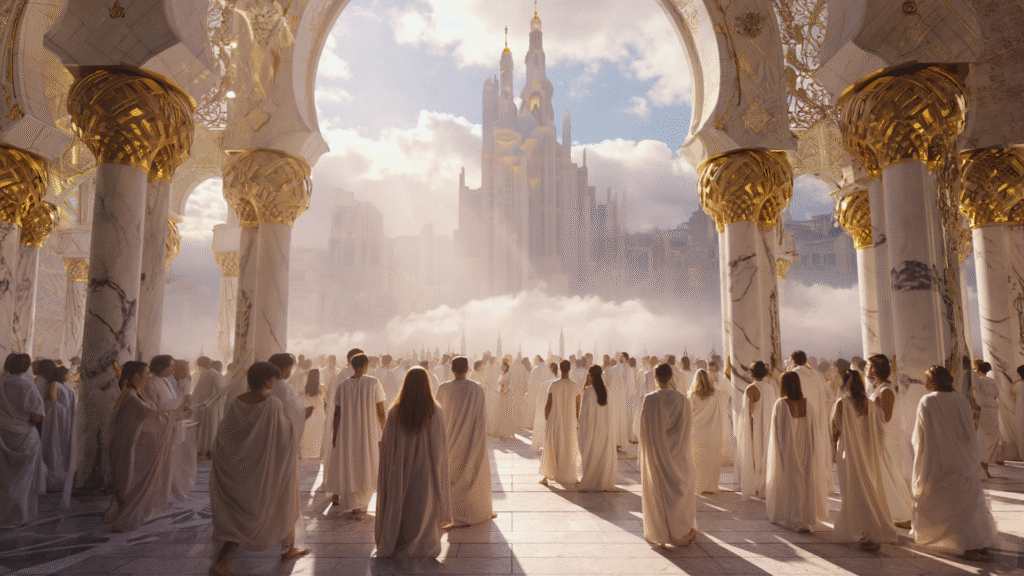
Some parts of Revelation feel like thunder in the distance. You can sense the storm, but you can’t yet see the full shape of it. The fifth seal revelation (Revelation 6:9-11) is like that. There are no horsemen riding out. No new weapon is introduced. Instead, John hears a courtroom-style cry for justice from people who already paid the highest price.
If you’re walking through John’s visions from Revelation 4 onward, the fifth seal can stop you in your tracks. Who are these martyrs, why are they “under the altar,” and why does God tell them to wait?
This article explains the fifth seal in the NKJV, with a dispensational, futurist view of the end times, and with plain language that doesn’t dodge the weight of the passage.
How the fifth seal revelation fits the flow of Revelation 4 to 6
Revelation shifts in chapter 4. John is caught up to heaven, and the scene changes from letters to churches (Revelation 2 to 3) to the throne room of God. In chapter 5, the Lamb (Jesus) takes the scroll, and the question becomes simple and intense: who is worthy to open it?
When the seals begin opening in Revelation 6, the judgments move in order. In a dispensational reading, this is not random poetry. It’s a timeline of real end times events that lead toward the Tribulation, the visible return of Christ, and the kingdom.
The first four seals are the well-known “four horsemen.” They bring conquest, war, famine, and death. The pattern feels like the world’s systems breaking apart from the inside. Then the fifth seal opens, and the camera angle changes. John is no longer watching chaos on earth. He’s shown a scene in heaven that explains what’s happening beneath the headlines.
That matters because it shows something many readers miss: Revelation isn’t only about what God does to judge evil, it’s also about what evil does to God’s people, and how God responds.
If you want to read the full NKJV wording in one place, see Revelation 6:9-11 in the NKJV. Keeping the exact phrasing in view helps, because the fifth seal turns on a few key lines: “under the altar,” “How long,” and “rest a little while longer.”
Revelation 6:9-11 (NKJV): what John saw under the altar, and why they cried
John says he saw “the souls of those who had been slain for the word of God and for the testimony which they held.” These are not people who died by accident. They were killed because they stayed loyal to God’s Word and wouldn’t back down from witness.
“Under the altar” points to sacrifice, not defeat
The altar image is loaded. In the Old Testament, blood from sacrifices was poured out at the base of the altar (see the pattern in Leviticus). So “under the altar” reads like a picture of lives poured out to God. The world treated them as disposable. Heaven calls them an offering.
This doesn’t mean they’re forgotten or stuck. It means their deaths are seen, counted, and remembered in the presence of God. Their suffering has a holy context, even when it looked meaningless on earth.
“How long, O Lord?” is a prayer for justice, not revenge
The martyrs cry out, “How long, O Lord, holy and true, until You judge and avenge our blood on those who dwell on the earth?” That phrase “those who dwell on the earth” shows up in Revelation as a moral category. It points to people who are earthbound in loyalty, hardened in rebellion, and resistant to God.
The martyrs aren’t asking permission to be bitter. They’re appealing to God’s holiness and truth. It’s the language of a courtroom, not a street fight. They’re asking God to act like God.
For a detailed verse-by-verse resource, see notes on Revelation from Dr. Thomas Constable. Even a quick look shows how carefully interpreters track these repeated phrases.
White robes and “rest” show comfort, but also a schedule
John says a white robe is given to each of them, and they’re told to “rest a little while longer,” until the number of additional martyrs is complete. White robes in Revelation regularly point to purity, victory, and acceptance before God.
The harder line is the waiting. God doesn’t deny their request. He answers it with timing. History is not spiraling out of His hands. It’s moving toward a set end.
A dispensational view: tribulation martyrs, prophecy, and God’s measured timing
In dispensational theology, Revelation 6 sits inside the future Tribulation period, following the removal of the church (often understood as the rapture) and leading into the outpouring of God’s wrath. Within that framework, the fifth seal highlights Tribulation martyrs, people who come to faith in that period and are killed for it.
This helps explain why the seal judgments don’t only describe political collapse. They also expose spiritual conflict. When light breaks into a dark place, the darkness pushes back.
So why would there be so many martyrs that a “number” has to be completed? Revelation’s answer is sobering: the end times will include a global pressure to worship what is false and reject what is true. The faithful will be targeted.
A Christian Seer, or any believer with a pastoral heart, has to sit with the human side of this. The fifth seal isn’t a trivia question about prophecy charts. It’s a reminder that courage may cost something, and that God sees every cost.
At the same time, the passage guards us from despair. God gives three clear signals:
- He calls them “holy and true”: Their cry is not wrong, it’s righteous.
- He gives white robes: Their identity in Christ is secure.
- He sets a limit on the season: “A little while longer” is not forever.
If you want a focused discussion of the seal’s theme of martyrdom and waiting, this article on the fifth seal and tribulation martyrdom offers helpful context (even when readers differ on broader timelines).
One more point matters for dispensational readers: this seal shows that God’s justice is real, but it is also patient. The Judge of all the earth will do right, and He will do it at the right time.
Conclusion: the cry of the martyrs still matters
The fifth seal revelation is a window into heaven’s record book. It shows that martyrdom is not invisible, and justice is not forgotten. The martyrs’ “How long?” is met with white robes and a promised finish line.
If you’re studying Revelation chapter by chapter, let this seal shape how you read the rest: God’s judgments are never random, and His timing is never careless. The question to carry forward is simple: will we stay faithful to Christ when the world wants our silence? Prophetic Scripture doesn’t just inform us, it prepares us.