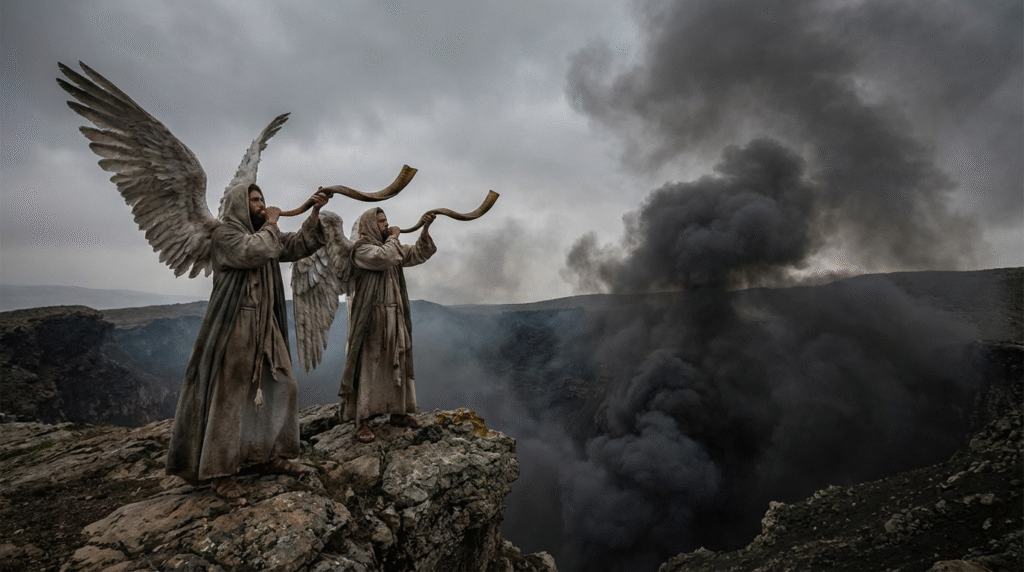

Revelation can feel like standing on a shoreline at night. You hear waves, you sense power, but you can’t yet see what’s moving out there. That’s why many believers go looking for Revelation 13 explained in plain words, especially in the NKJV.
The bottom line is simple: Revelation 13 describes a future, Satan-driven world system that demands worship, then enforces loyalty through a mark tied to commerce. It’s not written to entertain us. It’s written to steady us.
If you’ve been tracking John’s visions from Revelation 4 onward, this chapter fits the flow of end-times events and calls for calm, Scripture-shaped, prophetic discernment.
Where Revelation 13 fits in the end-times timeline (dispensational view)
In a dispensational reading, Revelation 4 shifts the scene to heaven, and the judgments that follow (seals, trumpets, bowls) unfold during Daniel’s 70th week, the Tribulation. Revelation 13 lands in the thick of that conflict. By this point, the dragon (Satan) has already been identified (Revelation 12), and now his strategy becomes visible on earth.
John isn’t just predicting chaos. He’s showing structure. Evil organizes itself. It builds a throne, a message, and an enforcement arm. That matters because it keeps us from treating Revelation like random symbolism. The chapter reads like a warning siren with a steady pattern.
Revelation 13 also highlights a repeated time marker: 42 months. In dispensational teaching, that lines up with the final 3.5 years of the Tribulation, often connected with the Antichrist’s open persecution and demand for worship (compare Daniel 9:27). In other words, Revelation 13 describes the season when deception goes public.
If you want a quick chapter-level walkthrough that stays close to the text, see Revelation 13 chapter meaning. It helps you see how the whole chapter moves from political power to religious pressure to economic control.
One more anchor point helps: Revelation 13 is about allegiance. It’s worship language first, and market language second. The order matters.
The Beast from the sea: the Antichrist’s rise, rule, and worship campaign
John first sees “a beast rising up out of the sea” (NKJV). It has seven heads and ten horns, with blasphemous names. The imagery echoes Daniel’s visions of empires, which fits the idea of a final Gentile world power expressed through a single ruler.
This “beast” receives authority from the dragon. That detail pulls back the curtain. Behind political force sits spiritual force. It’s like seeing puppet strings in bright light. The hands aren’t human.
John also records a shock: a fatal wound that appears healed. The world responds with amazement and worship. The point isn’t to satisfy curiosity about how it happens. The point is that the beast’s platform grows through a counterfeit “resurrection” moment that fuels global loyalty.
Then comes the hard line: the beast blasphemes God and makes war with the saints for a set time (42 months). Dispensational readers commonly connect this with the second half of the Tribulation, when the Antichrist’s true nature shows fully.
Revelation 13 doesn’t picture neutral politics. It pictures worship redirected, truth mocked, and pressure applied to anyone who won’t bow.
It’s also worth noticing what John does not say. He doesn’t call believers to hunt for the Antichrist in every headline. He shows the character of the system so God’s people can recognize it when it arrives in its full, future form.
For a detailed verse-by-verse resource, Revelation 13 commentary can help you slow down and observe the passage carefully.
The Beast from the earth and the mark: deception, control, and wise discernment
Next, John sees a second beast “coming up out of the earth.” It has two horns like a lamb but speaks like a dragon. That contrast is the whole warning. It looks gentle. It sounds hellish.
Many teachers call this second beast the False Prophet (a title used later in Revelation). Its role is religious. It promotes the first beast, performs signs, and pushes the world toward a single act: worship the image of the beast.
To make the contrast clear, here’s a simple side-by-side summary:
| Feature | Beast from the Sea | Beast from the Earth |
|---|---|---|
| Main role | Global ruler and persecutor | Religious promoter and enforcer |
| Look and tone | Terrifying, dominant | Lamb-like appearance, dragon-like voice |
| Core tactic | Power and blasphemy | Signs, persuasion, then coercion |
| Main demand | Worship the beast | Worship the image, accept the mark |
The second beast also drives the “mark of the beast” system. In the NKJV, the mark is received on the right hand or forehead, and it connects to buying and selling. John adds “Here is wisdom,” then points to the number 666.
This is where fear often rushes in. Still, Revelation 13 gives guardrails that keep us from panic.
- The mark is tied to conscious loyalty in a worship system, not an accident.
- The pressure is global and organized, not scattered local trends.
- The context includes the image of the beast and lethal consequences for refusal.
- The goal is to replace devotion to God with devotion to the beast.
- The call is to wisdom, not obsession.
If you want a careful, straightforward explanation of the mark passages across Revelation, see what the mark of the beast is.
So what does “wise discernment” look like today, especially for believers who value prophecy and prophetic insight? It starts with refusing to treat every new technology or crisis as the mark. It also refuses the opposite error, acting like Revelation 13 can’t happen in real history. Scripture calls us to stay awake, grounded, and faithful.
A Christian Seer who serves biblically will point people back to Jesus, not feed speculation. The Holy Spirit’s guidance never competes with God’s written Word. In the end times, that order protects you.
Conclusion: steady faith beats panic in Revelation 13
Revelation 13 is sobering, but it’s not confusing once you track the flow: Satan empowers a ruler, a religious enforcer promotes him, and the world is pressured to worship and comply. The chapter calls for wisdom, endurance, and loyalty to Christ.
Keep reading Revelation the way it was given, in sequence, with Jesus at the center. And as you study prophecy, ask a simple question: am I growing in courage and worship, or in fear and guesses? The Lamb still wins.